
A group of doctoral students, both Indonesian and foreign, in the Sociology of Religion Program at the Faculty of Theology, Satya Wacana Christian University (SWCU), visited the Muslim-Christian villages of Winong (Pati) and Dermolo (Jepara), Central Java, on October 10, 2026. Led by course lecturer Sumanto Al Qurtuby, the visit was part of the Christian-Muslim course, giving students a chance to learn firsthand about interreligious engagement and harmony at the grassroots level.
In Pati, they visited Al Muqorrobin Mosque and the Indonesian Christian Muria Church (GKMI). They also met with local Muslim and Christian leaders at the mosque to discuss Christian-Muslim relations and interreligious tolerance. The mosque chair (ketua takmir) and the pastor (pendeta) also attended.
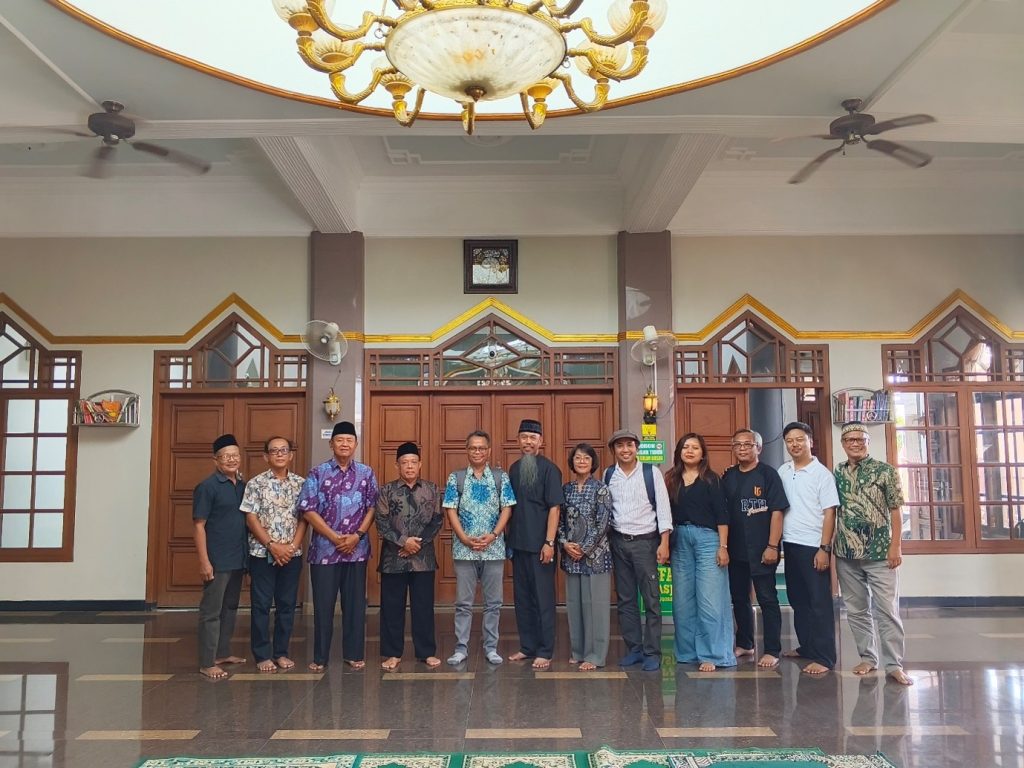
One of the Mosque’s founders explained that the Mosque, founded in 2001, was inspired by the symbolic tolerance between Muslims and Christian in Jakarta, where the Istiqlal Mosque and the Cathedral Church face each other. “We purchased the Mosque land from local Buddhist and deliberately built it facing the Church, inspired by the position of Istiqlal Mosque facing the Cathedral in Jakarta,” he said.
Interestingly, local Christian did not oppose the mosque’s construction and even helped with the building process. This spirit of mutual support then continues among Winong’s Muslim and Christian residents.
One symbol of this communal solidarity is the canopy connecting the mosque and the church. The canopy was built to accommodate Muslim worshippers’ prayers (salat) on the road outside the mosque up to the church’s front terrace. Conversely, Christians can also use the canopy space when Church services attract large congregations. “The canopy serves as a sheltering symbol of togetherness while bridging religious differences,” said a Muslim senior resident during an informal conversation over lunch.
Didik Hartono, pastor of GKMI Winong, said, “We live side by side peacefully because we uphold the principle of sedulur selawase (siblings forever).” The pastor also highlighted the philosophy of Silih Asah, Silih Asih, Silih Asuh, which emphasized mutual learning, caring, and protection.
The community also maintains harmony through communication and adjustments to the religious schedule. The mosque head, Zuhri, explained that a Sunday Service was once moved from 7 a.m. to 9 a.m. because it coincided with Eid al-Fitr prayer (salat Id Idul Fitri). Likewise, the Mosque does not use its loudspeaker during the Church service.
Moreover, local Muslims and Christians frequently cooperate to prepare for religious celebrations and organize interfaith gatherings, community services, and other social activities. Recently, they have also worked together to provide clean water during the prolonged dry season and agreed to share cemetery land.
The visit concluded with a shared meal at GKMI Winong. The philosophy Urip Iku Urup, displayed in front of the Church, reminds people that life should benefit others. Winong demonstrated how dialogue, mutual respect, and practical cooperation can nurture harmony without erasing differences in faith.
***
While Muslim-Christian engagement in Winong, Pati, runs quite smoothly, in Dermolo, Jepara, the two religious groups have been involved in tensions for years, though they can live peacefully and harmoniously in the end. How can dialogue and interfaith solidarity help communities overcome religious conflict? The doctoral students posed this question during a field visit to GITJ Dermolo, a Javanese Mennonite church in Jepara, Central Java.
Theofilus Tumijan, pastor of GITJ Dermolo, recounted the congregation’s 19-year struggle to use its church building for worship. Despite obtaining construction approval, the congregation faced opposition in 2006 that halted construction and prevented the building from being used for services. A breakthrough came in 2021, when dialogue among the Jepara Regency Government, the opposing group, and interfaith organizations led to an agreement allowing worship in the church building.
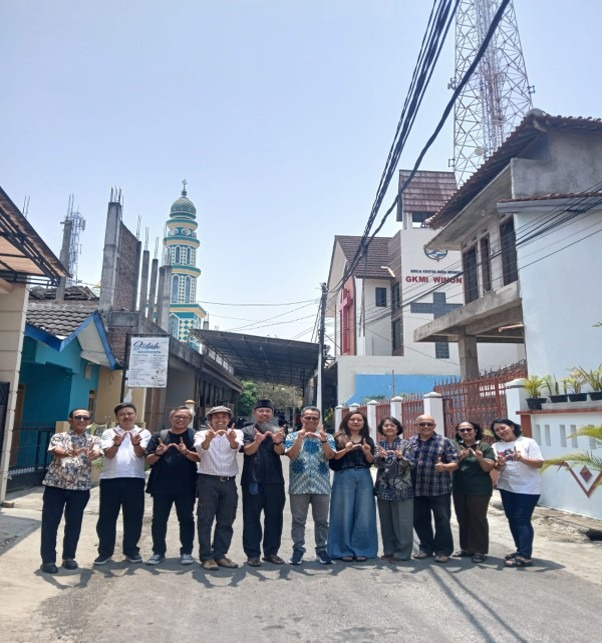
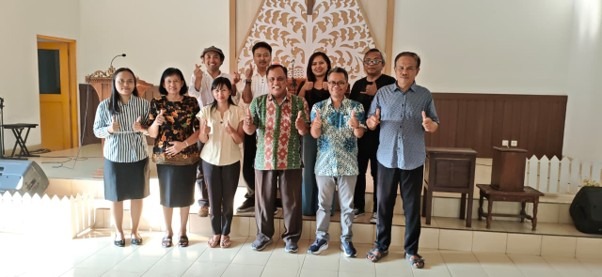
Pastor Theofilus highlights dialogue, patience, and relationship-building as alternatives to violence and confrontation. Nongovernmental and interfaith organizations, such as eLSA, LBH, Pelita, and Central Java Forum for Religious Harmony, supported the congregation throughout its struggle. The visit offered students practical insights into religious freedom, interfaith solidarity, and the role of peaceful engagement in addressing religious conflict.
*Deddy Dh. Tumonggi and Iwan Firman Widiyanto contributed to this report.