
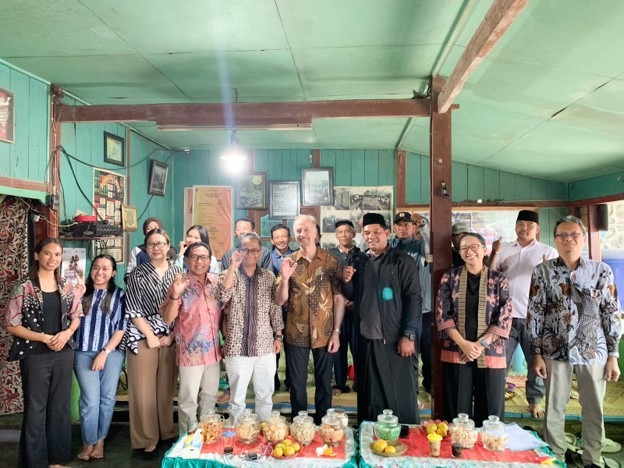
Recently, representatives of CSR-CMR, namely Sumanto Al Qurtuby, Rev. Dr. Gunawan Y. A. Suprabowo, and Rev. Irene Ludji, along with Robert W. Hefner, Professor of Anthropology and Global Affairs at Boston University and President of the American Institute for Indonesian Studies, visited Thekelan Hamlet in the Batur Village of the Semarang Regency, Central Java. Located on the slopes of Mount Merbabu, Thekelan is known for its long tradition of interreligious harmony and peaceful coexistence.
Rev. Akris Mujiyono, Chair of the GKJTU Synod, who is currently conducting doctoral research in Thekelan, accompanied the delegation. Furthermore, Supriyo, the hamlet’s head and a member of Nahdlatul Ulama (Indonesia’s largest Muslim social organization), along with the hamlet’s religious representatives from Muslim, Buddhist, and Christian backgrounds (including Protestant, Catholic, and Pentecostal), warmly welcomed the delegation.
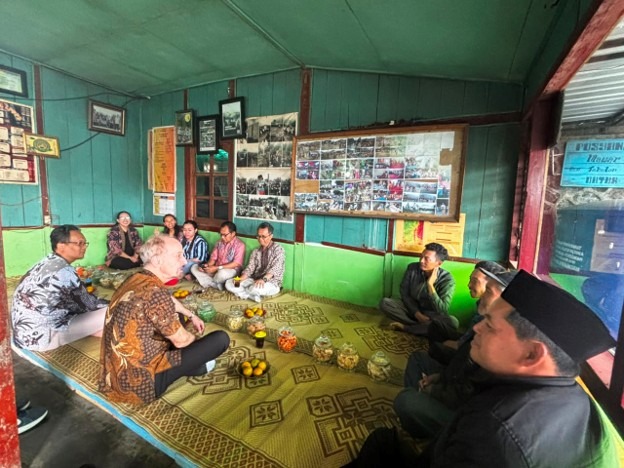
The meeting took place in a modest lesehan (a traditional informal floor-seating arrangement), reflecting the egalitarian and hospitable character of Thekelan society. During the meeting, Robert Hefner and CSR-CMR reps raised several questions about how the local community maintains interreligious harmony, tolerance, and peaceful coexistence amid religious diversity.
According to the community representatives, good communication, mutual engagement, and deliberation are key to resolving differences and maintaining social and interreligious harmony. They also emphasized religious celebrations as important spaces for strengthening interreligious relationships. Residents of the hamlet regularly attend one another’s religious celebrations, including Eid al-Fitr, Christmas, and Vesak, exchanging greetings, asking for forgiveness, and strengthening bonds of fellowship. The open house tradition is also part of community life, allowing people from different religious backgrounds, including visitors from outside Thekelan, to participate in and experience this atmosphere of fellowship.
Beyond religious celebrations, harmony in Thekelan is sustained through gotong royong (mutual communal cooperation and collective work) in social life and religious practices. For the hamlet’s villagers, religion or faith is a personal commitment, while harmony is understood as a shared responsibility. This principle is expressed through concrete cooperation, including residents from different religious backgrounds participating in building houses of worship through labor, ideas, and material assistance.
The community also recognizes challenges from external groups holding more exclusive religious views. However, residents respond through good communication while maintaining their commitment to peaceful coexistence. This commitment is associated with the values of Pancasila (the country’s state ideology), particularly unity, peace, and shared well-being. For the people of Thekelan, religious diversity is not an obstacle to unity, but a reality managed through mutual respect, self-restraint, and solidarity.
The visit reaffirmed the importance of lived interreligious harmony, rooted in everyday encounters, communication, mutual forgiveness, hospitality, and gotong royong. Thekelan’s experience offers valuable lessons for academic research and interfaith education, showing that harmony is not built by eliminating religious differences but by turning diversity into opportunities for friendship, cooperation, and shared responsibility in Indonesia’s pluralistic society.
*Rev. Dr. Gunawan Y. A. Suprabowo contributed to this report.